Deformity Correction (Scoliosis & Kyphosis) – Advanced Spine Deformity Treatment in Rohini by Dr. Mayukh Mukherjee
Introduction
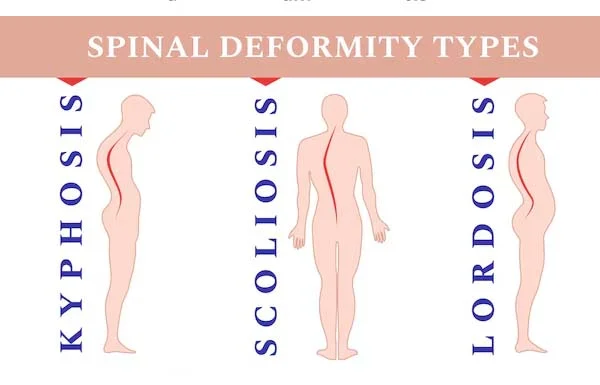
Deformity Correction Surgery for scoliosis and kyphosis is a highly specialized spinal procedure performed to correct abnormal curvature of the spine, restore proper alignment, reduce pain, and improve long-term spinal balance. Scoliosis refers to a sideways curvature of the spine that may involve rotation of vertebrae, while kyphosis refers to excessive forward bending of the upper spine, often resulting in a rounded back appearance. These deformities may develop gradually and can affect children, adolescents, and adults depending on the underlying cause and severity. Mild deformities may remain unnoticed for years, but moderate to severe spinal curvature can lead to back pain, uneven posture, breathing difficulty, muscle fatigue, reduced mobility, and progressive structural imbalance. Under the expert guidance of Dr. Mayukh Mukherjee, patients searching for Scoliosis Treatment in Rohini, Kyphosis Correction Surgery in Rohini, spine deformity specialist in Rohini, and best spine surgeon in Rohini receive detailed spinal assessment and personalized treatment planning according to age, curve severity, spinal flexibility, and neurological status. Modern deformity correction techniques aim not only to improve appearance but also to protect spinal function, prevent worsening curvature, and improve quality of life over the long term.
Causes
Spinal deformities such as scoliosis and kyphosis may occur for several reasons depending on age, spinal growth, bone strength, and underlying medical conditions. Adolescent idiopathic scoliosis is one of the most common forms, where spinal curvature develops during growth without a clearly identified cause. Congenital scoliosis may result from abnormal vertebral development present since birth. Adult scoliosis often develops because of age-related disc degeneration, vertebral collapse, or progressive spinal imbalance. Kyphosis may be caused by poor posture, vertebral compression fractures, degenerative disc disease, spinal infection, trauma, congenital defects, or disorders such as osteoporosis. In some cases, spinal deformity progresses slowly and is first noticed through uneven shoulders, one-sided waist prominence, forward bending of the back, or difficulty standing upright. Severe deformity can also compress nerves and affect breathing capacity when the thoracic spine is involved. Dr. Mayukh Mukherjee carefully evaluates each patient through X-rays, MRI, spinal flexibility studies, and neurological examination before recommending scoliosis correction treatment in Rohini or kyphosis surgery in Rohini to determine the safest and most effective correction strategy.
Treatment
Treatment for scoliosis and kyphosis depends on the degree of spinal curvature, progression rate, symptoms, and age of the patient. Mild cases may initially be managed through observation, physiotherapy, posture correction, and bracing, especially during growth years. However, moderate to severe deformities, progressive curves, spinal imbalance, chronic pain, or nerve compression often require surgical correction. Surgical treatment usually involves spinal fixation using screws and rods, controlled realignment of vertebrae, and spinal fusion to maintain corrected alignment permanently. In kyphosis correction, excessive forward bending is reduced to restore normal posture and spinal balance. In scoliosis surgery, the abnormal sideways curvature and vertebral rotation are corrected carefully while protecting the spinal cord and nerves. Under the expertise of Dr. Mayukh Mukherjee, patients looking for advanced scoliosis surgery in Rohini, kyphosis specialist in Rohini, and spinal deformity correction surgery in Rohini receive highly planned treatment using modern instrumentation and precision techniques designed for both safety and long-term correction. Post-surgical care includes rehabilitation, strengthening exercises, posture training, and long-term monitoring of spinal alignment.
Benefits of Treatment
Deformity correction surgery provides major benefits beyond cosmetic improvement because spinal alignment directly affects pain, mobility, nerve function, and overall body mechanics. One of the most important benefits is improved spinal balance, which reduces abnormal strain on muscles, discs, and joints. Patients treated by Dr. Mayukh Mukherjee for best scoliosis treatment in Rohini often experience reduction in chronic back pain, improved posture, and better standing comfort after correction. In kyphosis cases, surgery can improve upright posture, breathing efficiency, and body confidence by reducing excessive forward bending. Another major advantage is prevention of curve progression, which helps avoid future deformity-related complications such as nerve compression, vertebral degeneration, and imbalance. Surgical correction also improves symmetry of the shoulders, waist, and trunk in scoliosis patients. In severe cases, early correction can protect long-term lung function and walking ability. For many patients, successful deformity correction leads to better movement, stronger spinal support, and improved quality of life.
FAQs
1. When does scoliosis require surgery?
Scoliosis usually requires surgery when the spinal curve becomes severe, continues progressing, causes pain, affects posture significantly, or begins interfering with breathing, balance, or daily activities. The decision depends on curve angle, age, and spinal flexibility.
2. Can kyphosis be corrected without surgery?
Mild kyphosis may improve with posture correction, exercises, and physiotherapy, but severe kyphosis with structural vertebral changes, persistent pain, or progressive forward bending often requires surgical correction for lasting improvement.
3. Is deformity correction surgery safe for adults as well as younger patients?
Yes, deformity correction surgery can be performed in both adolescents and adults after detailed spinal evaluation. Surgical planning differs according to age, bone quality, flexibility, and the type of deformity present.
4. How long does recovery take after scoliosis or kyphosis surgery?
Recovery varies depending on the complexity of correction and spinal levels treated. Many patients begin gradual mobilization soon after surgery, but full recovery and spinal adaptation usually continue over several months with rehabilitation support.
5. Where can I consult for scoliosis and kyphosis correction in Rohini?
Patients searching for best scoliosis surgeon in Rohini, kyphosis correction specialist in Rohini, spinal deformity doctor in Rohini, and advanced spine alignment treatment in Rohini can consult Dr. Mayukh Mukherjee for complete spinal evaluation, expert correction planning, and long-term deformity care.